DNA Health Testing

Comprehensive DNA Disease Testing

While DNA disease testing of dogs has been available for a few years now, it was often restricted to a few diseases for only a handful of breeds. Scientific breakthroughs over the last few years have opened up the availability of more and more tests to cover even more diseases and also a greater number of breeds. Chevromist Kennels have led the way in terms of DNA testing of parent breeds for a number of designer breeds previously not DNA tested including PoochonsCavoodles and Moodles.


The term “DNA Testing” may sound invasive for the dog, but all of the following tests in our Comprehensive DNA Disease Testing are done via a buccal swab to minimise any discomfort to the dogs. A test via buccal swab involves placing a sterile swab inside the dog’s mouth and gently rubbing the swab against the inside of the dog’s cheek to collect some skin cells. The swab is then sent off to an independent genetic laboratory to be analysed. The results of the DNA screen must come back as all being clear (no disease causing mutations) before the dog is allowed to breed.

Our Comprehensive DNA Disease Testing includes testing for over 30 different genetic diseases that affect dogs. For our puppies to be given an assurance that they will not be affected by any of these diseases, the father of the litter must return a clear result for all of the diseases listed above. This is the best assurance that their puppies will not be affected.

While this list comprises of all the genetic disease tests available at the moment, screening for even more diseases will be included as new tests are developed and validated. While the list is very comprehensive, DNA testing does not replace the need to take great care of your dog throughout its life. Proper healthcare, diet, exercise in combination with DNA disease testing is the best way to ensure a long and healthy life for your new companion.

The Future of Canine DNA Disease Testing

Scientific research is progressing very quickly in the hunt for new DNA markers for canine diseases and we will continue to follow this progress keenly. As new tests become available for other diseases we will add them to the already extensive repertoire of diseases already screened for.
We test for the following genetic diseases

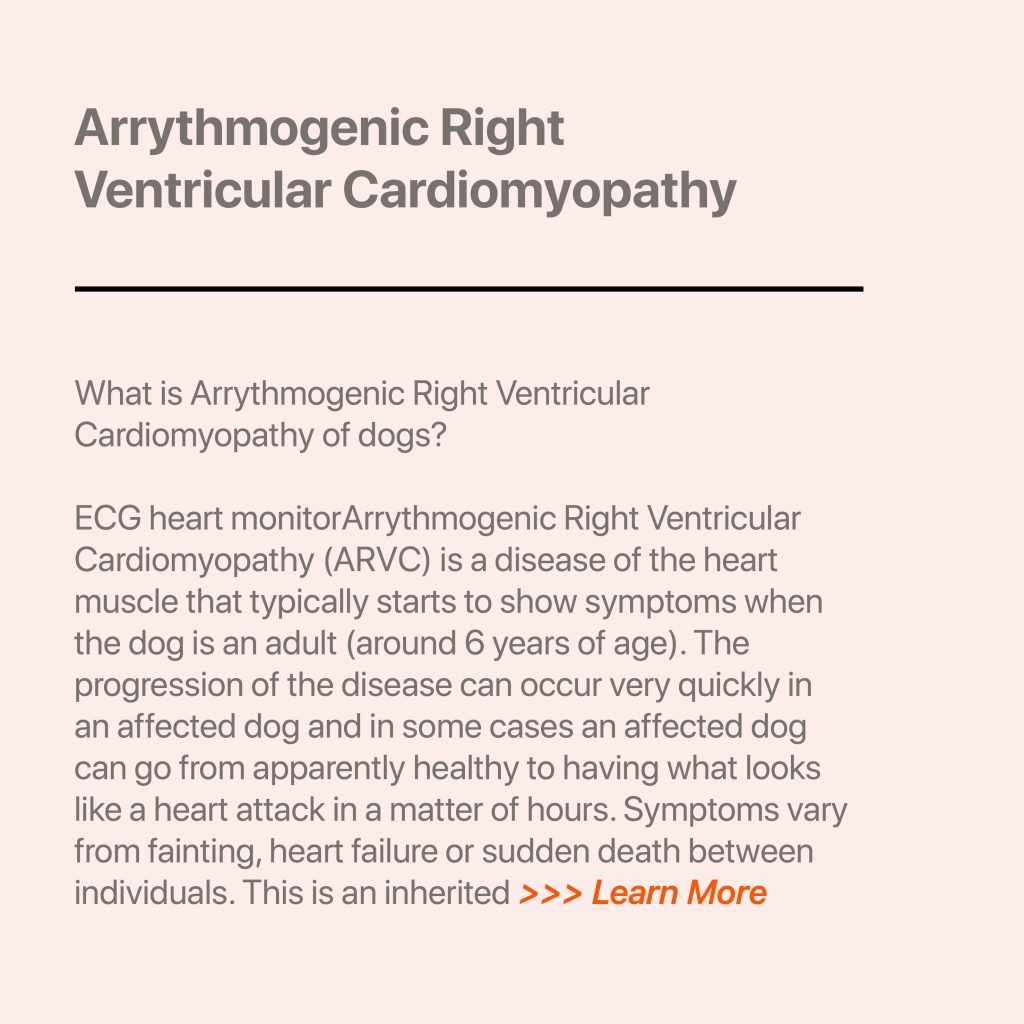
Arrythmogenic Right Ventricular Cardiomyopathy

━━━━━━━━━━

What is Arrythmogenic Right Ventricular Cardiomyopathy of dogs?

Arrythmogenic Right Ventricular Cardiomyopathy (ARVC) is a disease of the heart muscle that typically starts to show symptoms when the dog is an adult (around 6 years of age). The progression of the disease can occur very quickly in an affected dog and and in some cases an affected dog can go from apparently healthy to having what looks like a heart attack in a matter of hours. Symptoms vary from fainting, heart failure or sudden death between individuals. This is an inherited..

Learn More

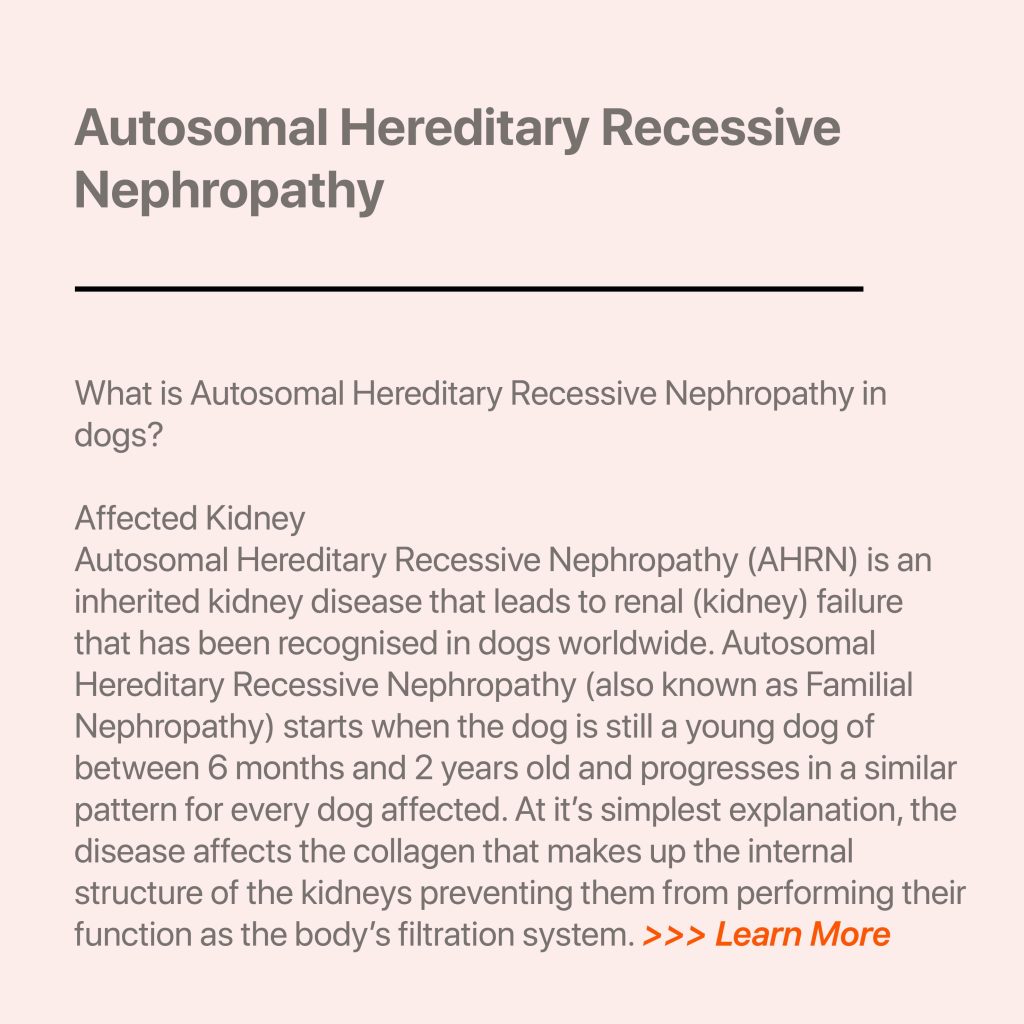
Autosomal Hereditary Recessive Nephropathy

━━━━━━━━━━

What is Autosomal Hereditary Recessive Nephropathy in dogs?

Autosomal Hereditary Recessive Nephropathy (AHRN) is an inherited kidney disease that leads to renal (kidney) failure that has been recognised in dogs worldwide. Autosomal Hereditary Recessive Nephropathy (also known as Familial Nephropathy) starts when the dog is still a young dog of between 6 months and 2 years old and progresses in a similar pattern for every dog affected. At it’s simplest explanation, the disease affects..

Learn More

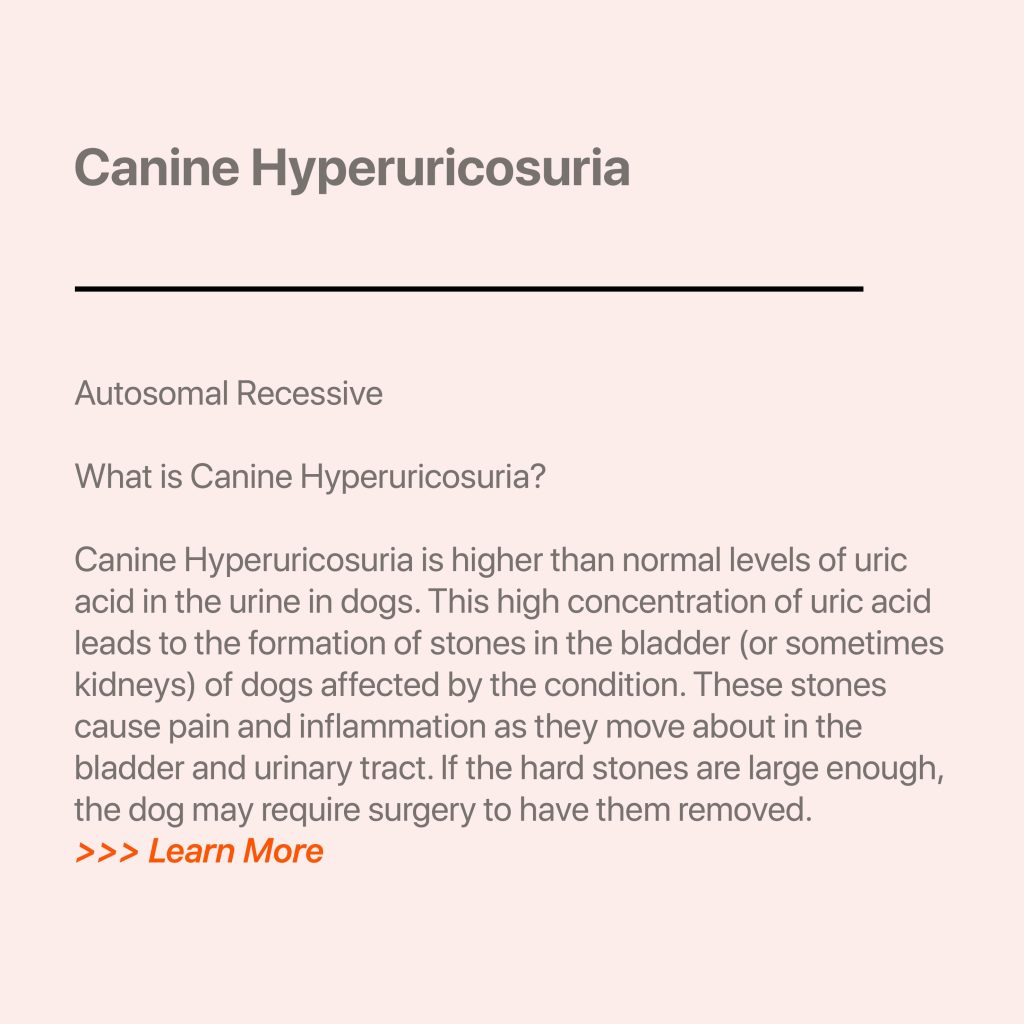
Canine Hyperuricosuria

━━━━━━━━━━

What is Canine Hyperuricosuria?

Canine Hyperuricosuria is higher than normal levels of uric acid in the urine in dogs. This high concentration of uric acid leads to the formation of stones in the bladder (or sometimes kidneys) of dogs affected by the condition. These stones cause pain and inflammation as they move about in the bladder and urinary tract. If the hard stones are large enough, the dog may require surgery to have them removed...

Learn More

Canine Leukocyte Adhesion Deficiency

━━━━━━━━━━

What is Canine Leukocyte Adhesion Deficiency?

Canine Leukocyte Adhesion Deficiency (CLAD) is a fatal disease in dogs that affects the ability of certain cells of the immune system from functioning as they are supposed to. Effectively this condition makes the dog unable to prevent attacks from microorganisms, in particular, bacteria. This lack of immune response allows any bacterial infection to run rampant through the dog, eventually leading to...

Learn More

Cerebellar Ataxia

━━━━━━━━━━

What is Cerebellar Ataxia in dogs?

Cerebellar Ataxia is a form of brain damage that affects the part of your dog’s brain called the cerebellum. This condition can arise from both inherited causes or during the life of your dog including infection and brain tumours. This is a progressive condition meaning that it gets worse over time and unfortunately is always fatal. This article deals with the inherited form of the disease where a DNA test is...

Learn More

Congenital Hypothyroidism

━━━━━━━━━━

What is Congenital Hypothyroidism in dogs?

Both dogs and people have a small gland in their throats called the thyroid gland. One of the functions of the thyroid is to produce two hormones called thyroxine and calcitonin that regulate the body’s metabolism. When too little of these hormones are made by the thyroid, a condition called Hypothyroidism develops. This can be due to a number of reasons from cancer to injury, but an inherited defect that results in...

Learn More

Cystinuria

━━━━━━━━━━

What is Cystinuria in dogs?

Cystinuria in dogs is an autosomal recessive disease that results in the condition where the dog is unable to properly reabsorb a number of amino acids including cystine from the urinary system. Normally, there is a low concentration of these amino acids in the urine but a dog with this condition has a high concentration of these amino acids in the urine. Cystine is normally absent from the urine. This results in the formation of cystine crystals in the ...

Learn More

Dry Eye Curly Coat Syndrome

━━━━━━━━━━

What is Dry eye curly coat syndrome in dogs?

Dry eye curly coat syndrome goes by a number of different names such as CKSID, ichthyosiform dermatosis and Congenital keratoconjunctivitis sicca. Essentially, the disease is characterised by a lack of tear production by the affected dog resulting in a lack of much tear film over the surface of the eye as well as the lining of the eyelids. Dry eye curly coat syndrome has a number of different causes from other illnesses to trauma but also has forms that are a result of...

Learn More

Episodic Falling Syndrome

━━━━━━━━━━

What is Episodic falling syndrome in dogs?

Episodic Falling Syndrome (EFS) in dogs is a neurological condition causing the muscle tone to increase suddenly in the dog to the point where the dog freezes up and cannot relax its muscles, resulting in the dog falling over. Dogs affected by Episodic falling syndrome which is an exercise-induced-hypertonicity disorder can start to have episodes from 14 weeks of age with most dogs begin being affected before they are 5 months of age. These episodes are often in response to...

Learn More

Exercise Induced Collapse (EIC)

━━━━━━━━━━

What is Exercise Induced Collapse in dogs?

Exercise-induced collapse (EIC) is an inherited neuromuscular disorder that affects many different dog breeds. The quirk in this condition is that many of the affected dogs are very fit, muscular dogs that have a high drive for play and are generally excellent examples of their breed. Exercise Induced Collapse gives the affected dog an intolerance of intense sustained exercise in otherwise healthy dogs. Most affected dogs usually remain alert and don’t seem to be in any pain when they...

Learn More

Fucosidosis

━━━━━━━━━━

What is Fucosidosis in dogs?

Fucosidosis is a severe progressive and ultimately fatal inherited disease in dogs. It has an early onset with the typical age of the onset of symptoms of between 1.5 to 4 years old. A lack of an enzyme called alpha-L-fucosidase is responsible for this debilitating disease that leads to the accumulation of complex polysaccharides in the cells of the body, leading to the diminished capacity of these cells to perform their normal function. The outward clinical symptoms of Fucosidosis is normally seen when the cells of the brain and nervous system are impeded in their...

Learn More

Factor VII Deficiency

━━━━━━━━━━

What is Factor VII Deficiency in dogs?

Factor VII Deficiency (FVII) is a bleeding disorder in dogs that is inherited in an autosomal recessive pattern. As the name suggests, dogs affected by this condition are deficient in the production of Factor VII. This blood protein is an essential part of the blood coagulation process. Like the relatively similar, but much more severe blood disorder haemophilia, Factor VII Deficient dogs may bleed heavily after injury as well as after even minor surgery. Often, most affected dog owners will be ...

Learn More

Globoid Cell Leukodystrophy – Krabbe’s Disease

━━━━━━━━━━

What is Globoid Cell Leukodystrophy / Krabbe’s Disease in dogs?

Globoid Cell Leukodystrophy(GCL) is known by a number of different names including Krabbe’s Disease and Galactocerebrosidosis. It is a very severe disease that affects the nervous system. Essentially, the condition arrises from the deficiency of a nervous system enzyme called galactocerebrosidase (GALC) that leads to the white matter of the nervous system degenerating. This white matter is the insulating matter or myelin that surrounds the nerve fibres and...

Learn More

Gangliosidosis (GM1)

━━━━━━━━━━

What is Gangliosidosis in dogs?

Gangliosidosis (GM1), also known as ganglioside storage disease, is an inherited disease in dogs that results in the storage of gangliosides thoughout the nervous system of the dog. Affected dogs lack the enzyme galactosidase that is required by the dog to break down complex carbohydrates, leading to the accumulation of ganglioside in the cells. Ganglioside accumulates in the cells of the brain, spinal cord and autonomic ganglia of the nervous system and it is this accumulation that prevents the normal function of the nervous system. The brain is the...

Learn More

Hereditary Cataract (HC)

━━━━━━━━━━

What is Hereditary Cataract in dogs?

Hereditary Cataract is an inherited eye condition in dogs that leads to the clouding of the lens of the eye which can become severe enough to render the affected dog blind. In dogs affected by Hereditary Cataract, there are structural changes to proteins in the eye that lead to a breakdown of tissue in the eye that causes the clouding. This clouded area of the lens prevents the normal passing of light through the affected parts of the...

Learn More

Ivermectin Sensitivity MDR1

━━━━━━━━━━

What is Ivermectin Sensitivity MDR1 in dogs?

Originally, thought to be specific to the drug Ivermectin, Ivermectin Sensitivity MDR1 is actually a disease characterised by adverse reactions to multiple drugs by an affected dog. This is an inherited disease that has an autosomal recessive pattern of inheritance. Affected dogs produce a very diminished level of a specific protein called P-glycoprotein. This protein is an essential part of the...

Learn More

L-2-hydroxyglutaricacidemia (L-2-HGA)

━━━━━━━━━━

What is L-2-hydroxyglutaricacidemia in dogs

L-2-hydroxyglutaricacidemia (L-2-HGA), also known as organic aciduria is a neurometabolic disorder affecting dogs. Dogs affected by L-2-hydroxyglutaricacidemia have a mutation in the enzyme responsible for breaking down L-2-hydroxyglutaric acid in the body. This leads to increased concentrations of L-2-hydroxyglutaric acid levels in the blood, urine and most damaging of all, the cerebrospinal fluid. The high levels in...

Learn More

Mucopolysaccharidosis

━━━━━━━━━━

What is Mucopolysaccharidosis in dogs?

Mucopolysaccharidosis is an inherited Lysosomal Storage Disorder where affected dogs lack the adequate function of an enzyme called alpha-L-iduronidase. This enzyme is found in the lysosomes of the cells. The lysosomes are special storage areas or bags inside the cells of the body that contain a special mix of enzymes responsible for disassembling complex molecules in an orderly fashion when required. This order relies on...

Learn More

Myotonia Congenita

━━━━━━━━━━

What is Myotonia Congenita in dogs?

Myotonia Congenita is an inherited muscle disease with an autosomal recessive pattern of inheritance. Myotonia Congenita is also referred to as non-inflammatory myotonia to distinguish it from the inflammatory type. Myotonia Congenita arises from genetic defects in the ion channels of skeletal muscle cells in the affected dog causing reduced conductance. The reduced conductance results in a delayed response to the end of muscle activity in the body so the dog’s muscles take a lot longer than...

Learn More

Narcolepsy

━━━━━━━━━━

What is Narcolepsy?

Narcolepsy is a disease or condition of the nervous system that can affect a range of different mammals including people and dogs. Dogs and people affected by narcolepsy appear to fall asleep but remain aware of their surroundings. In the case of affected dogs, they will usually lose control of their hind legs first before collapsing in complete paralysis of their limbs. Although Narcolepsy is not always inherited, Narcolepsy in dogs is often...

Learn More

Natural Bob Tail

━━━━━━━━━━

What is Natural Bob Tail in dogs?

Natural Bob Tail is a genetic mutation in some dogs that results in a naturally short tail. The length of the shortened tail varies between individuals from no tail at all to just a short version of what the tail would otherwise be. On its own, a bob tail poses no health concerns to the affected dog and if this is where any concern ends, Natural Bob Tail would not be a condition at all but simply a physical trait that may or may not be desirable in appearance. The problem Natural Bob Tail arises...

Learn More

Neonatal Encephalopathy

━━━━━━━━━━

What is Neonatal Encephalopathy in dogs?

Neonatal Encephalopathy (also known as Neonatal Encephalopathy With Seizures (NEWS)) is an autosomal recessive neurological disease that makes its effects felt in the first few days of life and is fatal to affected puppies by 7 weeks of age. This terrible disease affects the development of the puppy’s brain and nervous system with most puppies succumbing from its effects within days of being born....

Learn More

Neuronal Ceroid Lipofuscinosis (NCL)

━━━━━━━━━━

What is Neuronal Ceroid Lipofuscinosis in dogs?

Neuronal Ceroid Lipofuscinosis (NCL) is also known as Amaurotic idiocy or Batten disease, is an inherited lysosomal storage disease of the nervous system that results in degenerative changes of particular regions of the brain such as the cerebellum as well as in the spinal cord. Neuronal Ceroid Lipofuscinosis is a progressive disease with symptoms that get worse over time and particularly as the amount of degeneration of the central nervous system increases. It is inherited as...

Learn More

Phosphofructokinase Deficiency (PFKD)

━━━━━━━━━━

What is Phosphofructokinase Deficiency (PFKD) in dogs?

Phosphofructokinase Deficiency as the name implies is a lack of the enzyme Phosphofructokinase in affected dogs. This results in a lack of ability to metabolise glucose into energy available for the cells to use when they need it quickly. This has a great effect on the affected dogs in times of heightened emotion such as great excitement and fear. Phosphofructokinase Deficiency also destroys red blood cells, leading to anaemia in affected dogs. It has an autosomal recessive pattern of...

Learn More

Primary Lens Luxation

━━━━━━━━━━

What is Primary Lens Luxation in dogs?

Primary Lens Luxation, also known by its abbreviation PPL, is an often inherited disease of the eye that has been well documented in many breeds of dogs from terriers to the almost hairless Chinese Crested dogs. It is a painful condition that eventually leads to blindness in the affected dog. Dogs that are affected by Primary Lens Luxation undergo breakdown or disintegration of the ...

Learn More

PRA

━━━━━━━━━━

What is PRA?

Ok, so what is P.R.A? Well, P.R.A. stands for Progressive Retinal Atrophy which can lead to different degrees of blindness in dogs. While some affected dogs might end up with night blindness others can become completely blind or they may not go blind at all. The good news is that P.R.A. isn’t a very common condition amongst most dogs but is more likely to be seen in some breeds compared to others. Toy and Mini Poodles have a higher incidence of P.R.A. than most breeds. Testing for P.R.A is becoming more common and a...

Learn More

Pyruvate Dehydrogenase Phosphatase 1 Deficiency

━━━━━━━━━━

What is Pyruvate Dehydrogenase Phosphatase 1 Deficiency in dogs?

As the name suggests, Pyruvate Dehydrogenase Phosphatase 1 Deficiency is a lack of production of the enzyme Pyruvate Dehydrogenase Phosphatase 1 (PDHP1). This enzyme is inside every cell in the body and is involved in converting food into energy available for the cell to use and carry out its normal function. Without this enzyme, the cells fail to perform as they should and struggle to survive for the expected lifespan of each particular cell type. As would be expected with a lack of such a vital and important enzyme, many of the...

Learn More

Pyruvate Kinase Deficiency

━━━━━━━━━━

What is Pyruvate Kinase Deficiency in dogs?

Pyruvate Kinase Deficiency (also known as PKD) is a metabolic disorder that is inherited in an autosomal recessive pattern. Essentially, affected dogs lack and enzyme called Pyruvate Kinase that is required by every cell in the body to breakdown glycogen for energy. This enzyme is one of the key enzymes in the pathway of turning food into energy inside the cells of the body. A lack of this enzyme results in ...

Learn More

von Willebrand’s Disease

━━━━━━━━━━

What is von Willebrand’s Disease in dogs?

von Willebrand’s Disease (vWD) is believed to be the most commonly inherited blood disorder in dogs and definitely the most common bleeding disorder. It has had a number of different names given to it over the years including Pseudohemophilia, Vascular hemophilia, VWDII, VWDI and VWDIII. This autosomal recessive inherited disorder is widespread in the dog population and affects dogs from large to small and from a wide geographical origin. von Willebrand’s Disease has 3 different types, Type I, Type II and...

Learn More

von Willebrand’s Disease III

━━━━━━━━━━

What is Pyruvate Dehydrogenase Phosphatase 1 Deficiency in dogs?

von Willebrand’s Disease (vWD) is believed to be the most commonly inherited blood disorder in dogs and definitely the most common bleeding disorder. It has had a number of different names given to it over the years including Pseudohemophilia, Vascular hemophilia, VWDII, VWDI and VWDIII. This autosomal recessive inherited disorder is widespread in the dog population and affects dogs from large to small and from a wide geographical origin. von Willebrand’s Disease has 3 different types, Type I, Type II and...

Learn More